

A different approach to massage…
An original method
By booking a treatment at Empreinte Zen, you will discover an original methodology in massage therapy. This method is the result of a synthesis of my personal journey through Traditional Chinese Medicine, Shiatsu and Fascia Therapy. You will also be introduced to a different way of approaching massage. By browsing the pageA new method, born from my synthesis of traditional Chinese medicine, shiatsu, fascia therapy and tuina. It relies on a palpation and mobility test to target your areas of tension, and fits into a routine: see the "Concept des Empreintes" page., you can become familiar with my pragmatic vision for making the art of massage part of a routine.
A methodology based
on a synthesis of Fascia Therapy and Traditional Chinese Medicine
This is not the place for a detailed description of my working methodology, which is the result of a synthesis of my knowledge of Traditional Chinese Medicine, Shiatsu, Fascia Therapy and Tuina. Rather, I would like to present the main influences that guided me in this empirical research and allowed me to develop my manual therapy method.

The tensegrity structure
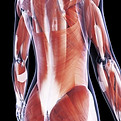
The myofascial meridians of Thomas W. Myers form a continuous musculoskeletal system, seeking a balance of tensions.

Palpation and mobility test
I use the phalanges of the fingers and toes to detect tension imbalances, following the principles of holography and somatotopy (reflexology, Dr Tan's acupuncture).

The meridians of TCM
The JingLuo 经络 network through which Qi flows in the human body.
Fascia Therapy
A map of the areas to work on and a direction of work to balance the tissue structure, based on the double spiral.

Balance Method
Dr Tan's yin/yang balance, to restore local and global equilibrium.

Trigger Points
Muscle micro-contractures, knots in the fibres, behind many pains. Releasing them relieves contractures and joint pain.
Session flow
I start with a discussion about your needs and your health, then you lie down on the table. I use pressure, flowing movements and gentle stretches, and at the end I give you stretching advice to do at home.

What are the benefits of massage?
What can you feel after a massage therapy session?
01
Improved mobility
We test flexion, extension, rotation and twisting before and after the session. It is the first observable progress.
03
Reduced pain
It often takes several sessions, especially if the pain is chronic.
02
Muscle relaxation
A method that balances fascia and muscles for a more fluid body, with less tension.
04
Side effects
You may experience some effects after a massage therapy session, such as:
- fatigue
- stiffness
- dizziness
- temporary pain
These effects are normal and are part of your body's rebalancing process. They are called the "rebound effect" and should not worry you. You can find out more about this phenomenon by reading on.